

Designer Lighting Formula
The easiest way to make a beautiful room look incredibly cheap? The wrong lightbulbs.
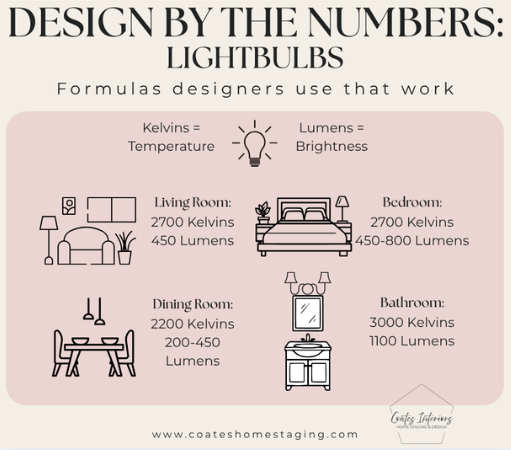
You can spend thousands on high-end paint, custom furniture, and stunning decor, but if you screw in the wrong bulb, you’ll instantly turn your cozy sanctuary into a sterile commercial office or a moody cave.
If you want your home to look like it was styled by a professional, you need to ignore the confusing marketing terms on the packaging ("soft white", "daylight", "bright white") and look strictly at the designer lighting formula.
1. The Kelvin Number is Your Best Friend
The Kelvin (K) rating measures the color temperature of the light. Brands use different marketing labels, but the Kelvin number will never lie to you.
2700K (The Designer Sweet Spot): This is the ultimate "chef’s kiss" temperature for living rooms, bedrooms, and dining areas. It provides a warm, inviting, golden-hour glow without turning everything orange.
3000K (The Utilitarian Clean): Best for kitchens, bathrooms, and laundry rooms. It gives you a slightly crisper, cleaner white visibility for tasks while keeping the space feeling welcoming.
4000K+ (The Forbidden Zone): Step away from the "Daylight" bulbs! Anything 4000K or higher emits a harsh, blue-toned light that washes out your finishes, flattens your textures, and destroys the atmosphere. Save these exclusively for your garage or workshop.
2. The Color Secret: Look for the CRI
Ever notice how a paint color looks gorgeous at the store but muddy under your home lights? That is due to a low Color Rendering Index (CRI).
Always check the back of the lightbulb box and choose bulbs with a CRI of 80+ (ideally 90+).
A high CRI ensures that your furniture fabrics, rugs, and paint colors look vibrant, accurate, and exactly as the designer intended.
3. The Golden Rules of Designer Lighting
Never Mix Temperatures: Keep your color tones consistent within the same visual space. Mixing a cool bulb and a warm bulb in the same room creates an uncoordinated, chaotic look.
Layer, Don't Just Flood: A single overhead ceiling light casts harsh shadows. True designer spaces use a mix of ambient ceiling light, task lighting, and accent lamps to give the room depth and warmth.
Always Add Dimmers: A simple dimmer switch gives you total control over the mood, helping you instantly transition a room from bright and productive to soft and relaxed.
Stop buying generic bulbs in bulk without checking the numbers! Walk through your home tonight, check your lightbulbs, and swap out those blue-toned culprits for instant warmth.